The manufacturing ERP made to
fit your stack, not fight it







Your tools
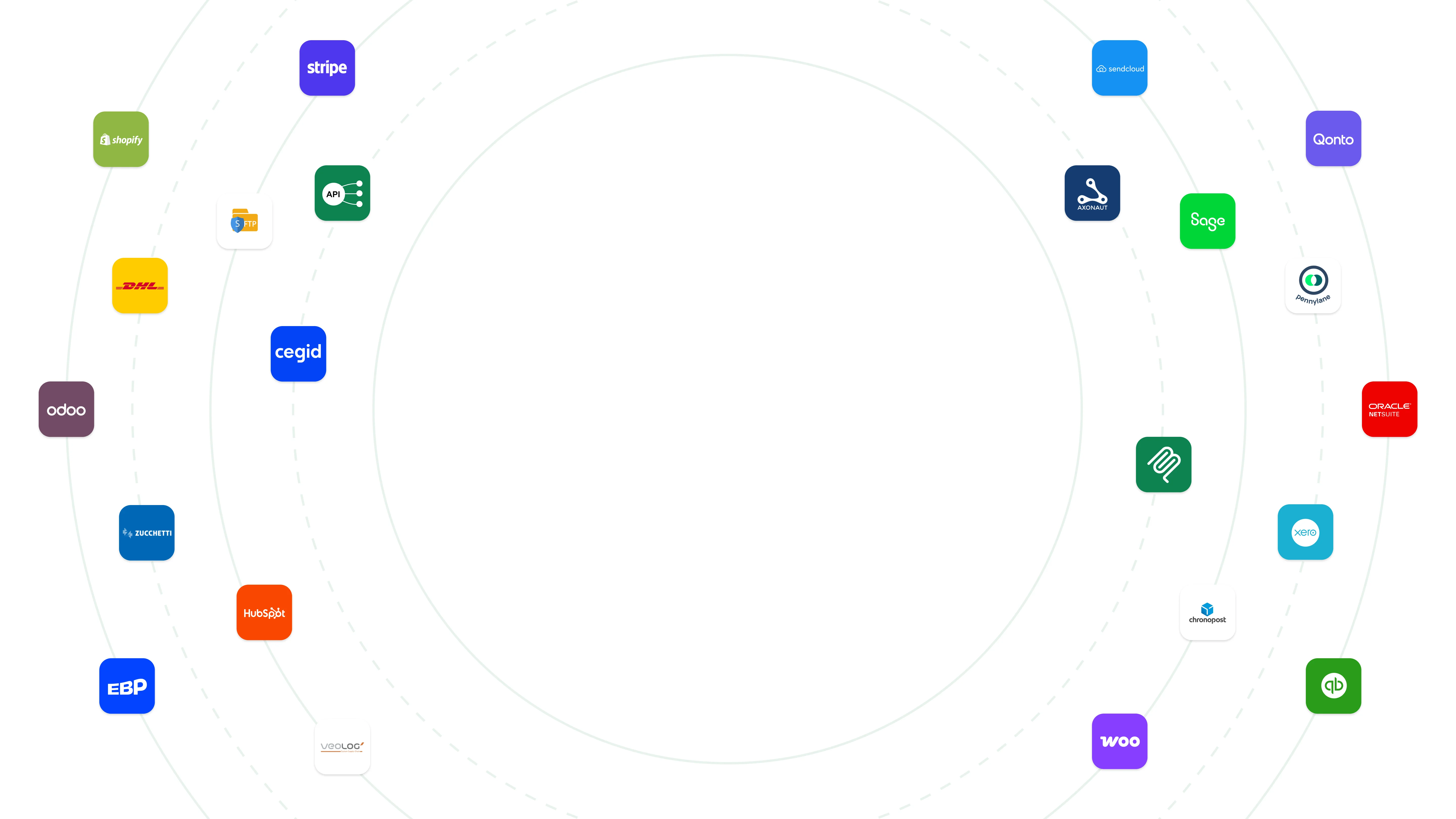
Connect to the tools you already use, from standard software (finance, CRM, 3PL, etc.) to hardware and machines on the floor.

Bonx at the center
Bonx covers the full operational lifecycle, from order management to logistics, and everything in between.

Integrated operations
Critical data feeds into the production flow, and what happens in production is reflected back across your tech stack.
Finance & accounting
Bonx automatically syncs your operational data (sales orders, stock movements, production costs, etc.) straight to your accounting tool. No exports, no reconciliation, no end-of-month scramble.

CRM & commerce
Bonx connects your sales pipeline and e-commerce channels directly to your production floor so orders can be processed automatically, inventory stays in sync, and customers can be kept informed.

Logistics & 3PL
Bonx keeps your logistics connected to everything happening upstream so your team always knows what's going out, when, and in what state. No manual chasing or status calls required.
EDI
Bonx supports electronic data interchange (EDI) for manufacturers supplying large retailers and automotive groups.
Hardware integrations
Bonx can connect to industrial equipment so machine data becomes part of the same system as orders, stock, production, quality, and traceability.
Connected operations in practice
See how Bonx customers are leveraging integrations to improve how their business runs.








When orders surged tenfold overnight, every package was traced and shipped to the same standard."




FAQ on Bonx integrations
Here are the questions manufacturers ask most often about how Bonx integrations work in practice.
An integrated enterprise resource planning (ERP) system is one that connects to the other tools a business already uses, so data flows automatically between systems rather than being copied by hand.
For manufacturers, that typically means connecting the ERP to customer relationship management (CRM) tools like HubSpot, e-commerce platforms like Shopify, accounting software, logistics providers, and sometimes warehouse management systems (WMS) or industrial equipment.
The goal is a single operational picture, not a single vendor.
No. Bonx handles the operational core of manufacturing: order management, inventory, purchasing, planning, production, quality, and logistics. It connects to the tools around it rather than replacing them.
Your CRM keeps the customer relationship. Your accounting tool keeps financial close. Your e-commerce platform keeps the commercial layer. Bonx makes those systems work together so data doesn't get lost between them.
Bonx has developed a proprietary integration engine that allows us to integrate virtually anything into your ERP. Here is a non-exhaustive list of some of the most common integrations requested by our customers:
CRM and commerce: HubSpot, Shopify, WooCommerce, etc.
Finance and accounting: We integrate with any of the 100+ financial software companies supported by Chift; this includes (but is certainly not limited to) Pennylane, Sage, EBP, Axonaut, Quickbooks, Xero, Cegid, etc.
Logistics and 3PL: Veolog, Sendcloud, Chronopost, DHL
Hardware: Bonx can access your machines via a synchronization agent; we have already successfully integrated with scales, printing machines, CNC machines, and more.
If the integration you're thinking about isn't listed here, talk to the team. We'd love to discuss your vision in more detail and work with you to figure out what is possible.
Bonx covers the full operational lifecycle of manufacturers, starting at the order management stage. That order can be passed to Bonx from Hubspot (or any other CRM).
From there, Bonx handles production requirements, stock reservations, procurement, quality steps, etc., sending the right operational data back to the CRM if/when needed.
In other words, sales keeps its pipeline and owns the in data in the CRM, and operations runs the manufacturing flow in Bonx.
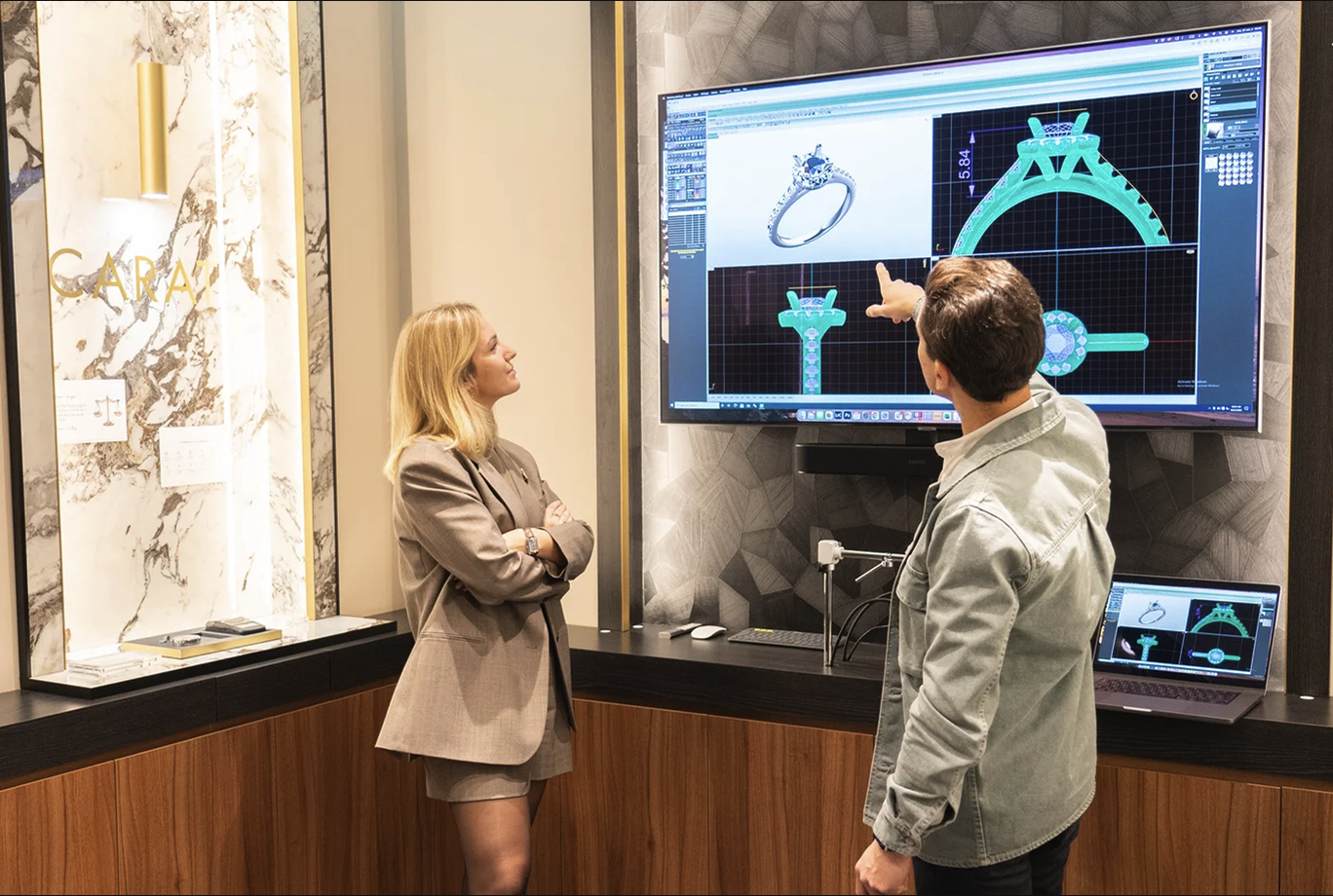
For example at Amantys, a custom jewelry manufacturer, each custom order creates a complete work order. Traceability is streamlined and data flows smoothly between HubSpot, the workshop, and Pennylane, reducing re‑entry, errors and client follow‑up requests.
Shopify owns the commercial and payment layer. Bonx receives the order and handles what happens next: stock reservations, production triggers, batch selection, quality checks, shipment preparation, and 3PL coordination.
For example Féroce, a grass-fed meat brand selling direct to consumers, deployed its Bonx integration, which included a Shopify integration, in 42 days before a national TV appearance multiplied their orders tenfold. Shopify stayed exactly as it was. Bonx handled traceability, cold storage, and logistics coordination at scale.
Bonx is not a financial ERP and does not manage invoicing, payroll, or financial close. Bonx does, however, sync reliable operational data to your accounting tool so finance can do its job with fewer corrections. Why manufacturing ERP and finance ERP should be separate systems explains the division in more detail.
Bonx connects to hundreds of accounting and finance platforms. Our most popular integrations include Pennylane, Sage, EBP, Axonaut, Quickbooks, Xero, and Cegid, but Bonx can integrate with virtually any accounting and finance platform via Chift.
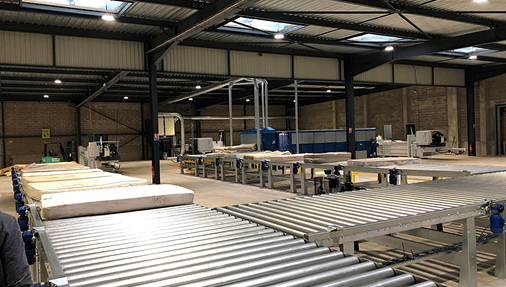
If your system has an API, Bonx can almost certainly connect to it. For example, Recyc Matelas, France's first mattress recycling company, runs a direct integration between Bonx and their weighbridge system that pulls tonnage data automatically to eliminate double entry.
Custom integrations are part of how the Bonx model works. Don't hesitate to reach out, the team would be happy to discuss your specific integration needs.
Bonx deploys in one to three months, integrations included. We categorically reject the idea that ERP implementation has to take 12-18 months and, in the end, delivers a system that is inflexible to change.
Case in point: Something Added went live in two months with a native HP 3D printer integration built from scratch. Féroce was live in 42 days with a full Shopify integration and QR code traceability in place.
Integration setup always happens during implementation, not as a separate project after go-live.
